

Well Fit Muzzles
A properly fitted muzzle should:
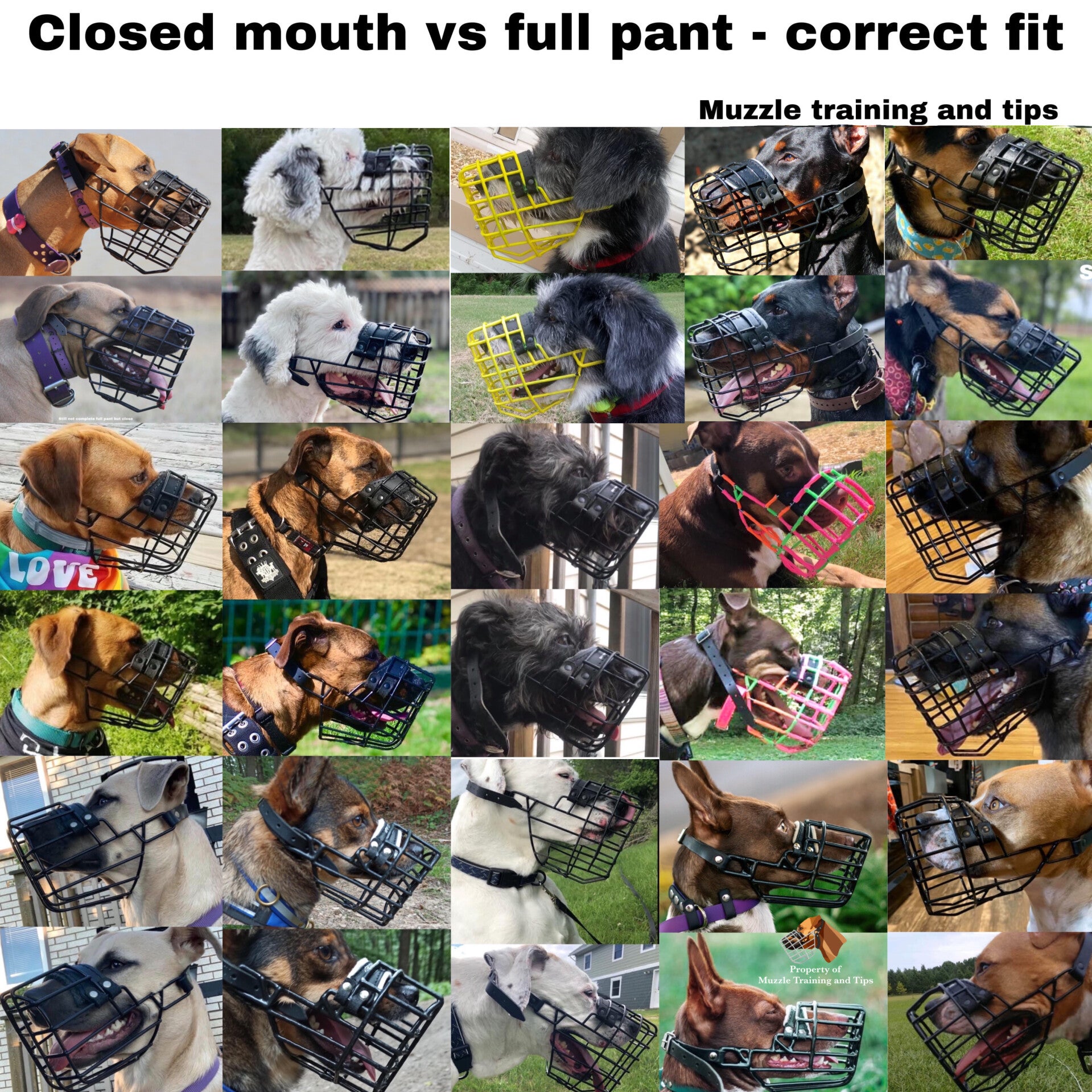
- Allow your dog to fully pant without being excessively tall/large
- Fit securely around the snout without pressing tightly against the sides
- Sit just in front of the eyes and not resting against the nose
- Leave room around the cheeks and chin to avoid restricting movement or causing rubbing
Exceptions to the Rule
There are some exceptions depending on your dog’s needs and how the muzzle will be used:
If your dog only needs to pant lightly (e.g., during short outings,nail trims), a muzzle that fits their regular pant may be suitable. Muzzle width and length can often be adjusted, so a slightly too-small or too-large fit on paper/sizing charts may still work depending on the model and how handy you are with modifications. Some owners prefer a little extra height to accommodate seasonal changes or growing dogs. While we don’t recommend excessive oversizing, a slight increase in height can help ensure comfort during hotter months or growth periods.

Why Some Muzzles Look Big
A common concern is that some muzzles appear too large. However, if the muzzle was sized using our guide, it’s likely that the extra space is necessary to accommodate your dog’s full pant. Dogs with larger pants simply need more room inside the muzzle. If a muzzle looks oversized and the dog doesn't have a large pant, it might actually be too big—but remember: you can’t accurately assess fit unless you’ve seen how your dog pants in it.
Spotting a Muzzle That’s Too Small
Recognizing a muzzle that’s too tight is usually straightforward. Warning signs include:
- The dog’s mouth remains fully closed inside the muzzle
- Cheeks are bulging out the sides
- Visible rub marks or signs of discomfort
- Labored breathing or inability to pant
A too-small muzzle restricts your dog’s ability to cool down and can cause serious health risks, especially in warm weather or stressful situations. When in doubt, size up and check for room to pant.


Length
In general, a well-fitted muzzle should sit about 0.5" (1.25 cm) away from the eyes and 0.25" (0.6 cm) off the tip of the nose. This helps prevent the muzzle from pressing into the eyes and still secure enough that the dog can’t slip it off over their nose.
For example, if your dog’s snout measures 4" from the nose tip to 0.5" below the eyes, you'll want a muzzle that’s around 4-4.25" in total length. This gives just enough space at the front while
maintaining a secure and comfortable fit. However, finding the perfect length isn’t always easy due to
limited sizing availability—especially for dogs with large panting needs. In most brands, as muzzle height increases to allow for panting, so does length, which can make balancing the two a challenge as this is not always the case with dogs.
You may need to prioritize height over exact length to ensure safe breathing and cooling and work on modifying length instead. Many dogs do just fine in a muzzle that’s slightly shorter or longer as long as it isn't pushing into the eyes.

Chin Length
Another factor in muzzle length is chin length—the vertical part of the muzzle that sits below the jaw. If this section is too long, it can press into the dog’s neck and force the entire muzzle to shift upward. This can make the muzzle appear too long, even if the noseband itself fits properly.
Modifying chin length is not always possible, especially on rigid styles, unless you're using a brand like JAFCO. For example, the Chopo 20C is listed as having a 4.25" length (including the noseband), but if you modify it down to 3.5", the chin section still measures 5". If your dog has a true 3.5" nose length, the excess chin length may prevent proper fit, even though the noseband measurement technically works once modified. You can see in the picture you could modify the length/noseband but the wire/long chin gets in the way of actually tightening the fit of the muzzle any further.

Width
Width is generally a more flexible measurement compared to length or height. Most dogs can tolerate a bit of extra width, especially since many muzzles can be adjusted or modified to better fit your dog’s snout. That said, while a slightly wider muzzle is usually fine, a muzzle that is too narrow will cause issues—restricting your dog’s ability to pant and leading to rubbing or discomfort.
The muzzle should rest comfortably over the snout and allow your dog to pant freely. As a guideline, there should be about 0.5" to 1.5" of space between the muzzle and your dog’s snout. One common challenge with muzzle width is fitting dogs with wider heads or cheeks relative to their snout. In these cases, the cheek bars of the muzzle may feel tight. However, many muzzle designs allow for some adjustment or reshaping in this area as well.
Front Width vs. Back Width
Muzzles typically have two width measurements:
Front Width: Top Orange Line, Not Modifiable
Back Width (or just Width): Middle Blue Line, Modifiable
Cheek Width: Bottom White Line, Modifiable
Unless specified, "width" usually refers to back width. Most muzzles can be adjusted to make the back width narrower (closer to the front width) or wider to accommodate broader heads.

The Right Height for Your Dog
Height is arguably the most important part of sizing your dog as this gives them the ability to pant/breathe/drink and live a normal and happy life. We recommend fitting to a full pant and ensuring you have a muzzle for every situation but some do choose to get something that fits
their regular pant instead.
Consider Your Dog’s Pant Size
No matter your dog's size they can have small, medium, large or sometimes what we call extreme pant sizes (usually seen in bully breeds where their mouths open very wide even with a smaller snout). How much height depends entirely on the dog itself, you cannot just “add 1-3 inches to
the closed mouth measurement” like most companies recommend for any dog and expect it to fit well. This is why we recommend measuring your own dog's full or regular pant and getting the proper height measurement as every dog is different. In photo: Closed mouth, regular pant and full pant in a well fit muzzle. Muzzle seems big until the dog pants freely without the muzzle being overly big.
Evaluating Fit with Photos
It’s easy to get most dogs panting after some exercise. Taking a picture is the best way to help with sizing as you can then compare once they have the muzzle on.
In the photo: You can see the dog's fullest pant without a muzzle, then you can see both the muzzles on the same dog. One only allows for a small regular pant and the other is slightly tall but allows a full unrestricted pant which was needed for the highly active dog. The wire muzzle is the much better option, although slightly tall I also had the option of sizing down knowing the size down was 1” less in height.




Create Your Own Website With Webador